














Cash Flow Management for Importers
Protect working capital when shipments are delayed.
Follow us


Protect working capital when shipments are delayed.
ATMAVAAN · IMPORT FINANCE
Last reviewed: 11 November 2026
Importer cash flow management means knowing where your money is tied up, forecasting every week, negotiating supplier payment terms and keeping a cash reserve. It matters most when a shipment is delayed, a supplier raises prices or customs holds your cargo. This guide is for US importers buying from India and other overseas suppliers, and it ends with a plan for when things go wrong.
In international trade, things rarely go exactly to plan. Successful importers are not the ones who avoid problems; they are the ones who protect their working capital when problems arrive. Cash flow matters more than profit. A shipment can carry a healthy margin, but a few weeks of delay keeps that money locked up while freight, duty, warehousing and supplier bills still fall due.
Ocean freight delays: check Vessel Schedules
Port congestion and customs inspections: plan with customs clearance
Supplier payment demands and currency changes
Higher ocean freight rates and the peak season surcharge
Seasonal demand changes
Freight shows how fast costs move. Xeneta reports that Asia–US West Coast spot rates in October were 343% above their level before the Middle East crisis (FreightWaves, 9 November 2026).
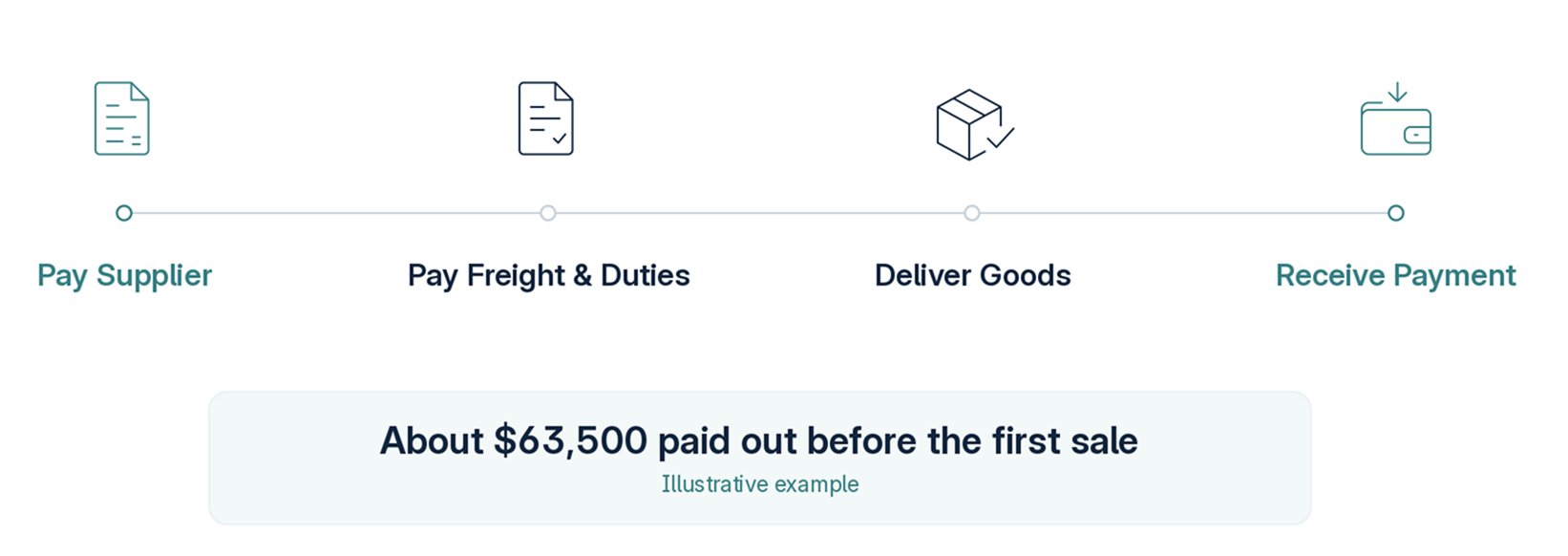
On $50,000 of goods, about $63,500 leaves your account before the first sale, and it can stay out for about 80 days.
Cash goes out about 80 days before the customer pays.
Illustrative: FOB goods; an Atmavaan Mundra–Los Angeles rate of $5,801 (valid to 30 November 2026); 5% MFN plus 10% Section 301 duty, as in our US Tariff Stack 2026 guide; 5 days for clearance and delivery; 30-day customer terms.
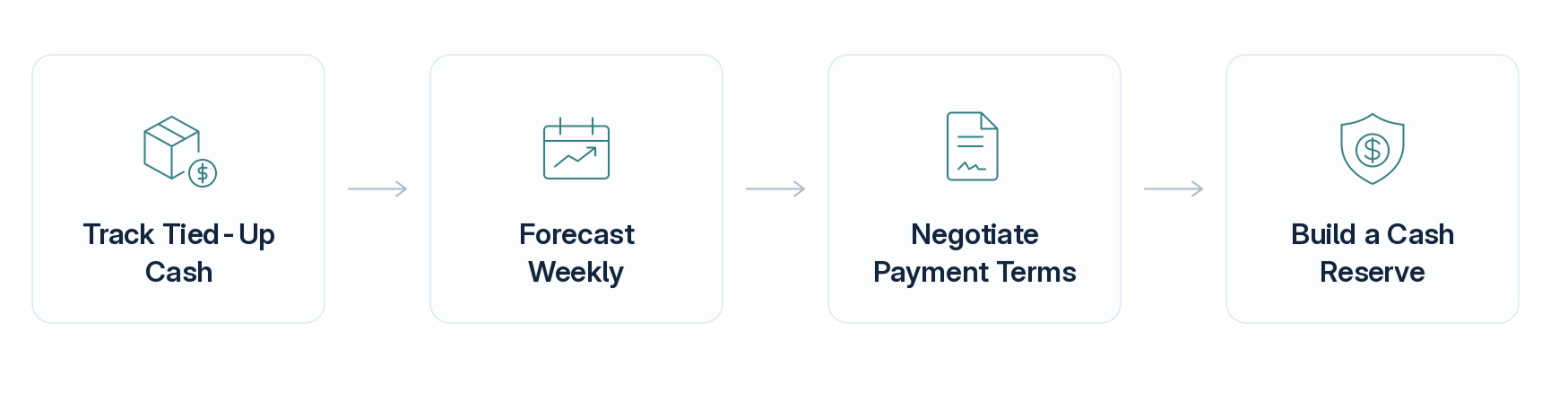
Cash flow stress is about uncertainty. Goods are in transit, suppliers need payment, customers may pay late and unexpected costs can appear at any stage of the supply chain.
1. Know where your money is tied up. Capital sits in inventory, goods in transit, customs duties and unpaid invoices. A simple import cash flow forecast gives you visibility.
2. Forecast weekly, not monthly. Track customer payments, supplier bills, freight, duties and expenses to spot shortfalls early.
3. Negotiate payment terms. Ask for longer supplier terms, partial deposits, trade finance options and faster customer collections.
4. Keep a contingency fund to absorb delays and higher freight costs.
5. Manage inventory. Excess stock locks up cash, so focus on fast-moving products.
6. Work with reliable partners. A reliable freight forwarder or NVOCC reduces surprises. Follow every box with Container Tracking.
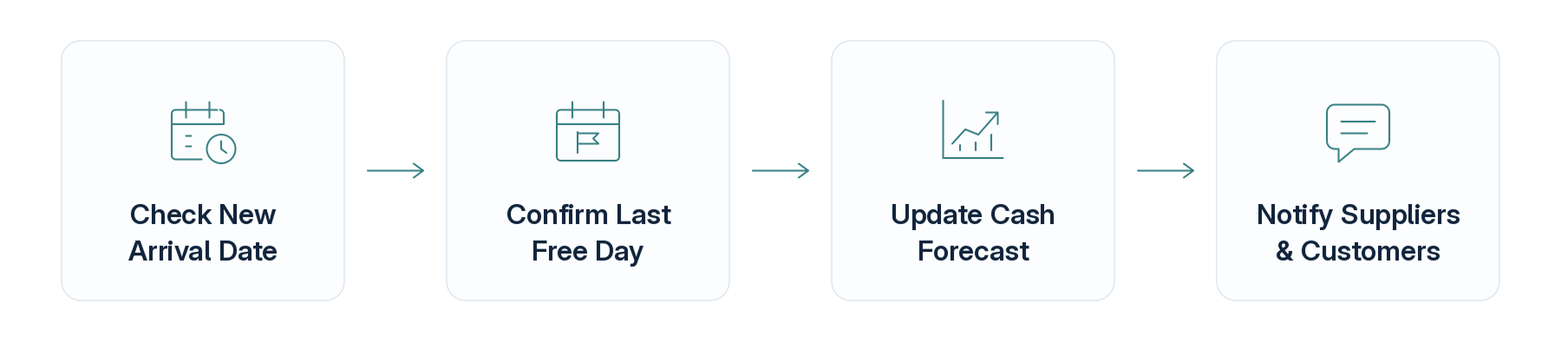
Find the new arrival date, check your last free day, update your forecast, and tell suppliers and customers early.
Cash flow stress is a normal part of importing, but it does not have to control your business. With forecasting, sensible payment terms and strong logistics partners, importers can turn uncertainty into resilience.
Figures are current as of 11 November 2026 and change often. The cash example is illustrative.
Get the latest reports, updates and highlights delivered to your inbox.
Get an estimate, or just tell a specialist what you are shipping — we handle everything from there.
Instant vessel schedules from trusted global shipping liners.
 Chat