













India to USA: The Full Import Cost
Plan beyond the supplier’s price.
Follow us


Plan beyond the supplier’s price.
By the Atmavaan Team | Last updated: November 2026
You buy goods from India for $50,000. By the time they reach your US warehouse, you may have paid almost $65,000. That difference is your landed cost from India to the USA. This guide explains what landed cost is, why you should calculate it, and how to do it in simple steps. For more on duties, see our US Tariff Stack 2026 guide.
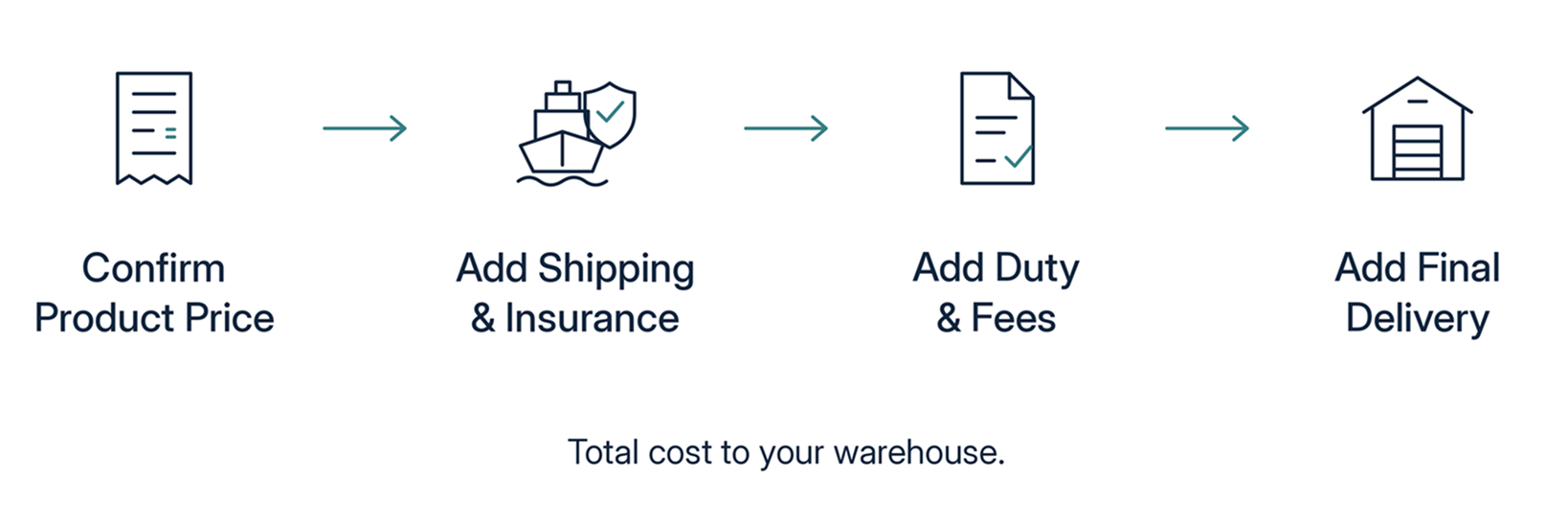
The landed cost is the total amount you pay to get a product from your supplier in India to your door in the US. It is the real cost of your goods, not just the invoice price.
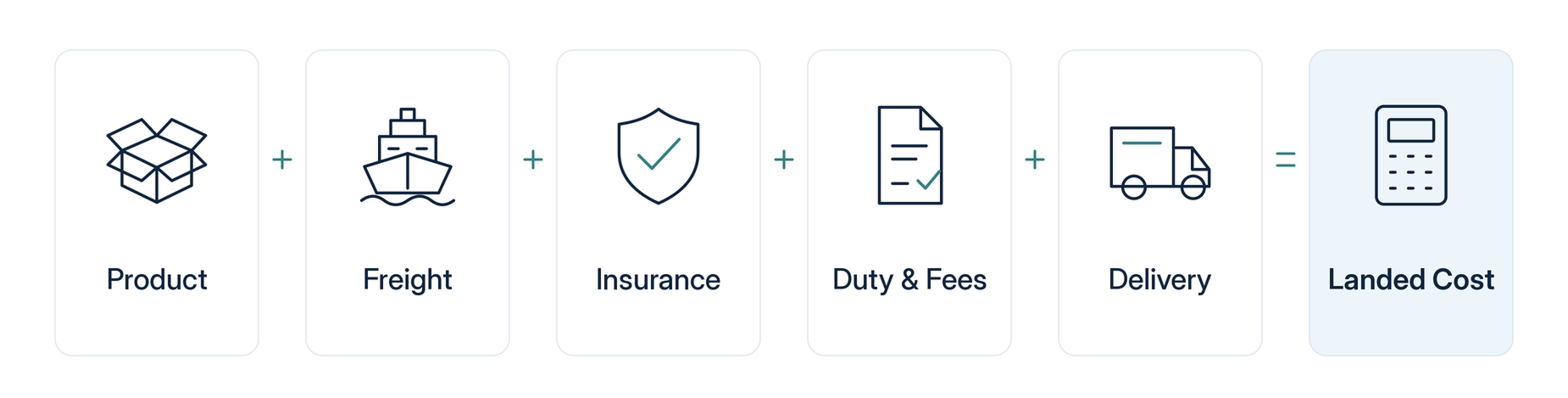
Landed cost = product price + shipping + insurance + duty + fees + delivery
If you only look at the supplier’s price, you see part of the cost. Calculating landed cost helps you:
Set the right selling price. You know your true cost per unit, so you don’t sell below cost by mistake.
Protect your profit. Hidden costs like duty and trucking can quietly eat your margin. Counting them early keeps your profit safe.
Compare suppliers fairly. A cheaper supplier can cost more once shipping and duty are added. The landed cost shows the real winner.
Plan your cash. Duty and fees must be paid before Customs releases your goods. Knowing the amount early means no last-minute rush.
Avoid surprise bills. You plan for every charge before you book, instead of finding out after the goods arrive.
Your Incoterm (International Commercial Term) in the sales contract decides which costs you pay:
FOB (Free On Board): the supplier pays until goods are loaded on the ship in India. You pay everything after.
CIF (Cost, Insurance and Freight): the supplier also pays shipping and insurance to the US port.
DDP (Delivered Duty Paid): the supplier pays everything, including US duty.
A tariff (or duty) is a tax on imported goods. Since July 24, 2026, most Indian goods pay two parts:
MFN (Most Favored Nation) duty: the normal US rate. It is different for each product, based on its HS (Harmonized System) code.
Section 301 duty: an extra 10% on most Indian goods.
Goods like steel and aluminum pay a Section 232 duty instead of the 10%. Some products are fully exempt. The older 50% and 18% rates no longer apply.
Import duty: MFN duty plus 10% (or the Section 232 rate). Check yours with the Atmavaan Tariff Simulator.
Ocean freight: the cost of shipping your container. It depends on container size, ports and the shipping line. Compare Ocean Freight Rates and Vessel Schedules, or see our Ocean Freight Shipping service.
ISF (Importer Security Filing): a form sent to US Customs at least 24 hours before your container is loaded in India. Mistakes can cost up to $5,000. We handle it through our Importer Security Filing service.
Customs clearance and fees: a broker fee, a customs bond (a guarantee that you will pay duty), the MPF (Merchandise Processing Fee) of 0.3464% of value (minimum
$34.58, maximum $670.86) and the HMF (Harbor Maintenance Fee) of 0.125%. See Customs Clearance Services.
Cargo insurance: protects your goods against loss or damage. See Freight Cargo Insurance.
Drayage (port trucking) and delivery: moving your container from the US port to your warehouse with Atmavaan Drayage. Return containers on time to avoid demurrage (a fee when the container stays at the port too long) and detention (a fee when you keep the container too long).
One 20-foot container from Nhava Sheva (Mumbai) to New York, with a 5% MFN rate and the 10% Section 301 duty.
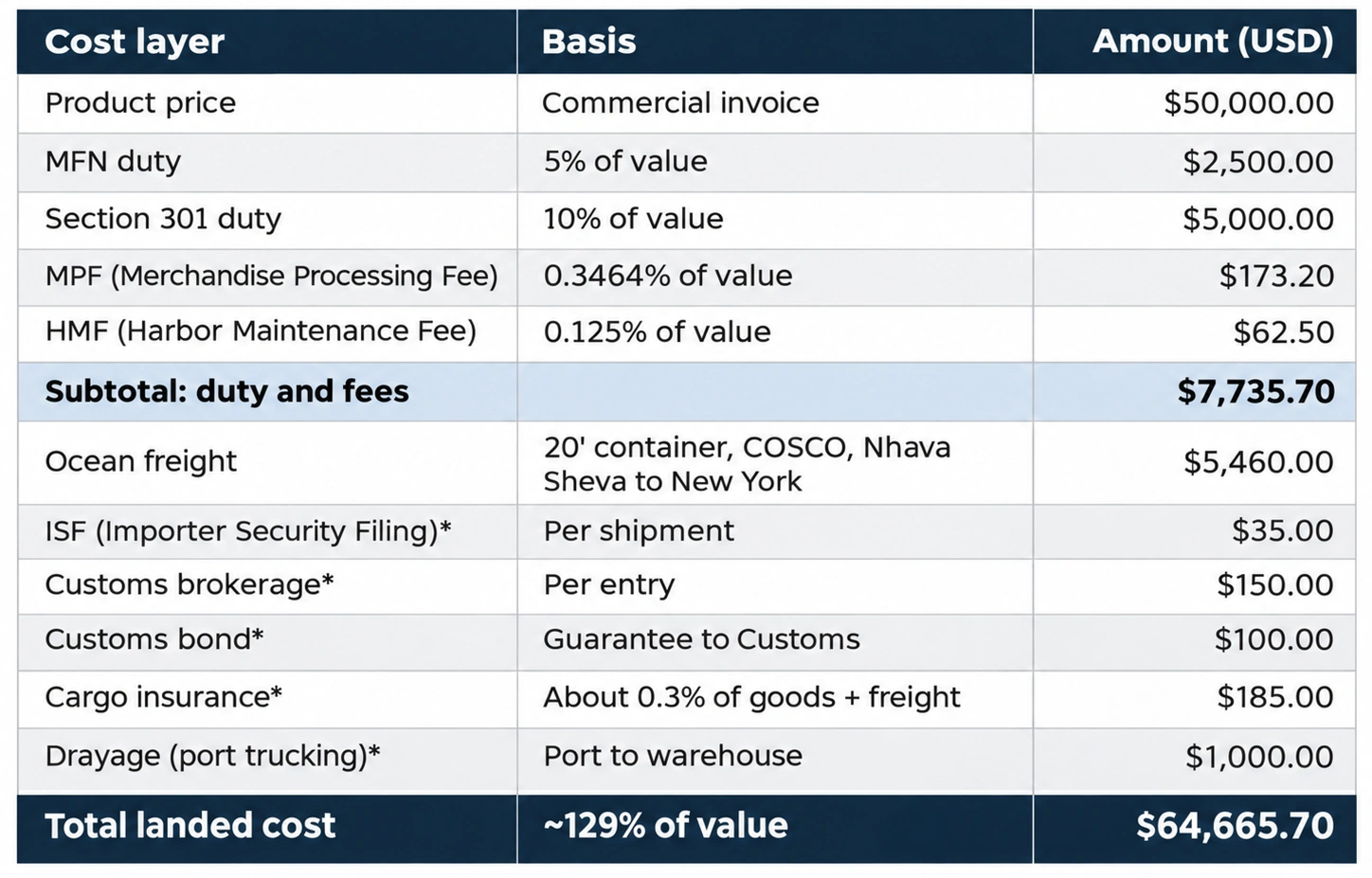
Ocean freight is an Atmavaan rate quoted in November 2026 (32 days, direct). *Estimates. Under FOB, the supplier pays costs in India. Rates change often, so get a current quote.
What this means: every $1 of product really costs about $1.29 by the time it reaches your warehouse. If you price your product on the $1 invoice cost, you lose money.
Good to know: US duty is charged on the value of the goods, not on shipping, as long as shipping is shown separately on your invoice.
Check your HS code before booking. One wrong digit can change your duty.
Check if your product is exempt from the 10% duty.
Combine shipments. The MPF has a maximum of $670.86, so one big shipment pays less in fees than many small ones.
Track every container with Container Tracking and return it on time.
Compare countries on the Tariff Comparison page.
Use one forwarder for ISF, customs and trucking, so nothing is missed.
Want to know your real cost before you book? Talk to the Atmavaan team for a landed cost estimate on your product.
Tariff rates change often. Figures are current as of November 2026. Sources: Office of the United States Trade Representative (USTR) and U.S. Customs and Border Protection (CBP), published in the Federal Register.
Get the latest reports, updates and highlights delivered to your inbox.
Get an estimate, or just tell a specialist what you are shipping — we handle everything from there.
Instant vessel schedules from trusted global shipping liners.
FREIGHT WITH SOUL · ON TIME, EVERY TIME
© Atmavaan 2026 · All rights reserved.
 Chat