












Overweight Containers & OTR Trucking
Check weight. Prevent delays. Move safely.
Follow us


Check weight. Prevent delays. Move safely.
ATMAVAAN · OTR TRUCKING GUIDE
Once a container leaves the port, its next journey is usually by road. This is called OTR, or Over The Road trucking. A truck pulls the container on a chassis to a warehouse, factory or distribution center. Many of these are long-haul runs across several states.
West Coast: Los Angeles / Long Beach to Salt Lake City, about 690 miles
East Coast: New York / New Jersey to Chicago, about 790 miles
Gulf Coast: Houston to Memphis, about 570 miles
Pacific Northwest: Seattle / Tacoma to Boise, about 500 miles
Longer routes mean more weigh stations, so an overweight load is more likely to be caught.
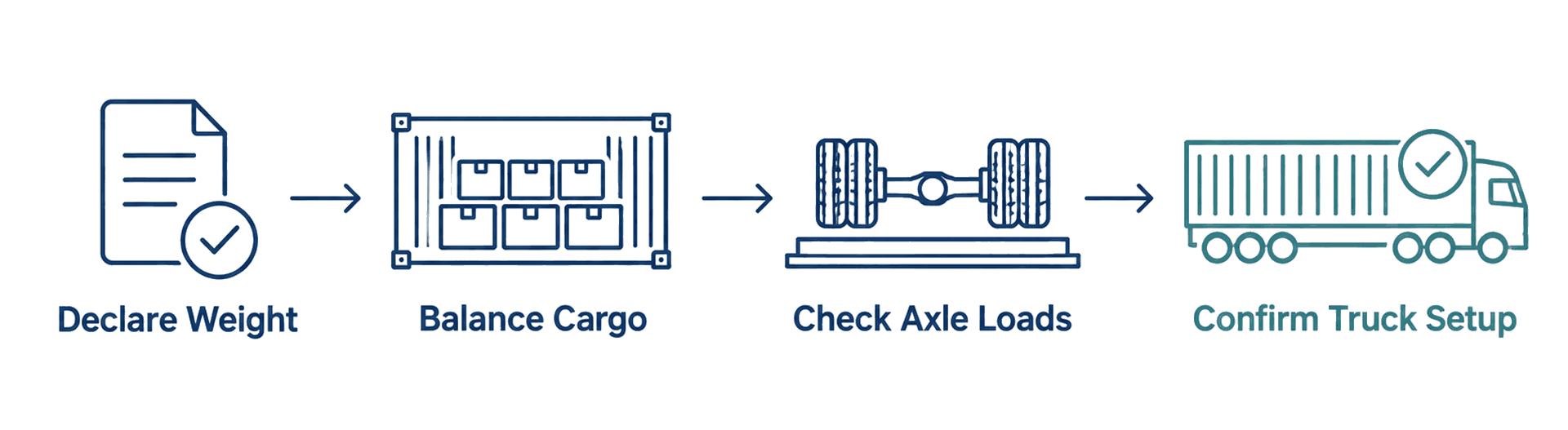
Many people only check the total weight. But the weight on each axle group matters just as much. The federal limit is 80,000 lbs gross, and it must be spread like this:
Steer axle (front): usually about 12,000 lbs
Drive axles (tractor tandem): up to 34,000 lbs
Chassis axles (rear tandem): up to 34,000 lbs
A truck can be under 80,000 lbs in total and still fail at the scale. If cargo is packed too heavily at one end, one axle group goes over its limit.
Longer braking distance, which raises accident risk on highways
Higher chance of tire blowouts and brake failure
Damage to roads and bridges that everyone uses
Greater risk of rollover on curves and ramps
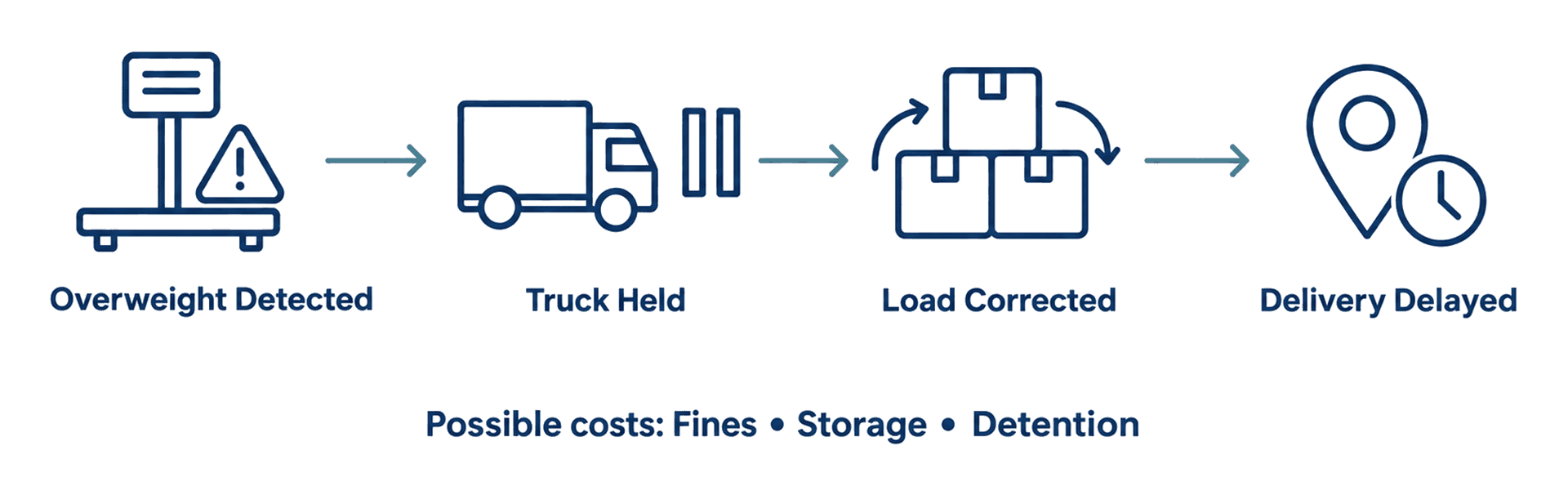
If a truck is caught overweight at a weigh station or roadside check, the driver gets a citation. Fines often go up with every extra pound and can reach thousands of dollars. The truck may also be held until the load is fixed. These costs are usually charged back to the shipper or the consignee, along with storage and detention fees.
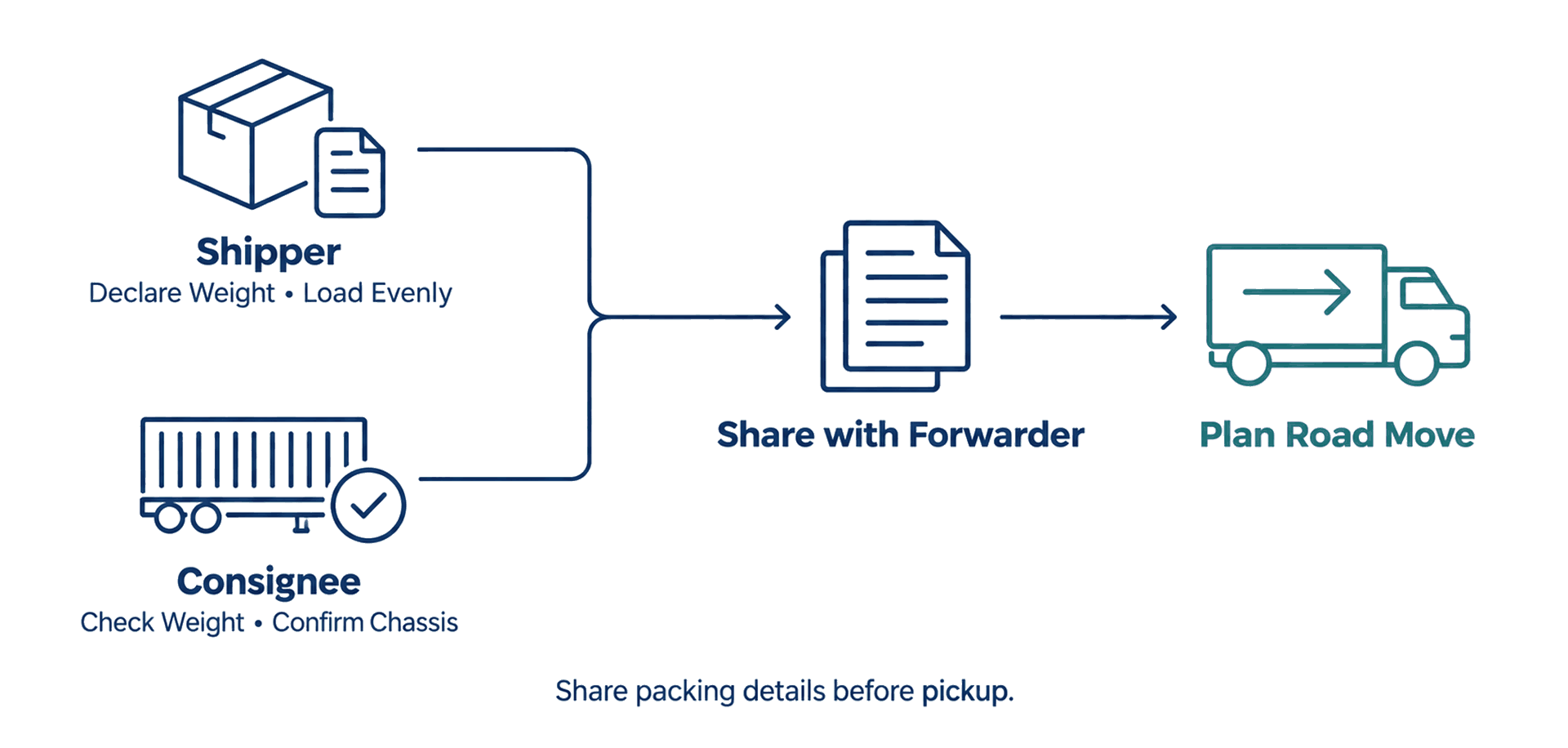
Shippers: declare the correct weight and load cargo evenly across the container floor.
Consignees: check weights before booking the truck, and ask for a tri-axle chassis or transloading when the box is heavy.
Both: share packing details early with your freight forwarder.
Atmavaan helps shippers and consignees plan every OTR move, from weight checks to the right chassis and trucker. With Container Tracking in Atmavaan Workspace, you can see when your box is ready for pickup and plan the road leg on time. Get the weight right before the truck rolls.
Get the latest reports, updates and highlights delivered to your inbox.
Get an estimate, or just tell a specialist what you are shipping — we handle everything from there.
Instant vessel schedules from trusted global shipping liners.
FREIGHT WITH SOUL · ON TIME, EVERY TIME
© Atmavaan 2026 · All rights reserved.
 Chat