













Overweight Containers: Hidden Risks
Know the limits before you ship.
Follow us


Know the limits before you ship.
ATMAVAAN Freight Forwarding · India–USA
LOGISTICS INSIGHTS · CONTAINER SAFETY
What “overweight” really means, and why a few extra tonnes can put ships, cranes and trucks at risk.
In January 2007, the container ship MSC Napoli was badly damaged in a storm in the English Channel and later beached off the coast of Devon. During the salvage, 660 dry containers from her deck were weighed. In 137 of them, the real weight was more than three tonnes off the declared figure. One box was 20 tonnes. Together, those 137 containers were 312 tonnes heavier than declared.
Weight errors alone did not cause the ship's failure, but the finding showed how often nobody truly knows what a container weighs.
A container can be overweight in two ways, and many shippers only think about the first.
Over the container's own limit. Every box has a maximum gross weight marked on its door and safety plate. For standard 20ft and 40ft containers this is usually around 30,480 kg, though ratings vary by unit. Go past it and the box itself is overloaded.
Over the road or rail limit. The trucks and rail lines on your route often allow far less than the container can hold. In the US, federal rules cap a truck's total weight at 80,000 lbs, including the tractor, chassis and empty box. So a container that is fine on the ship can still be too heavy for the final miles.
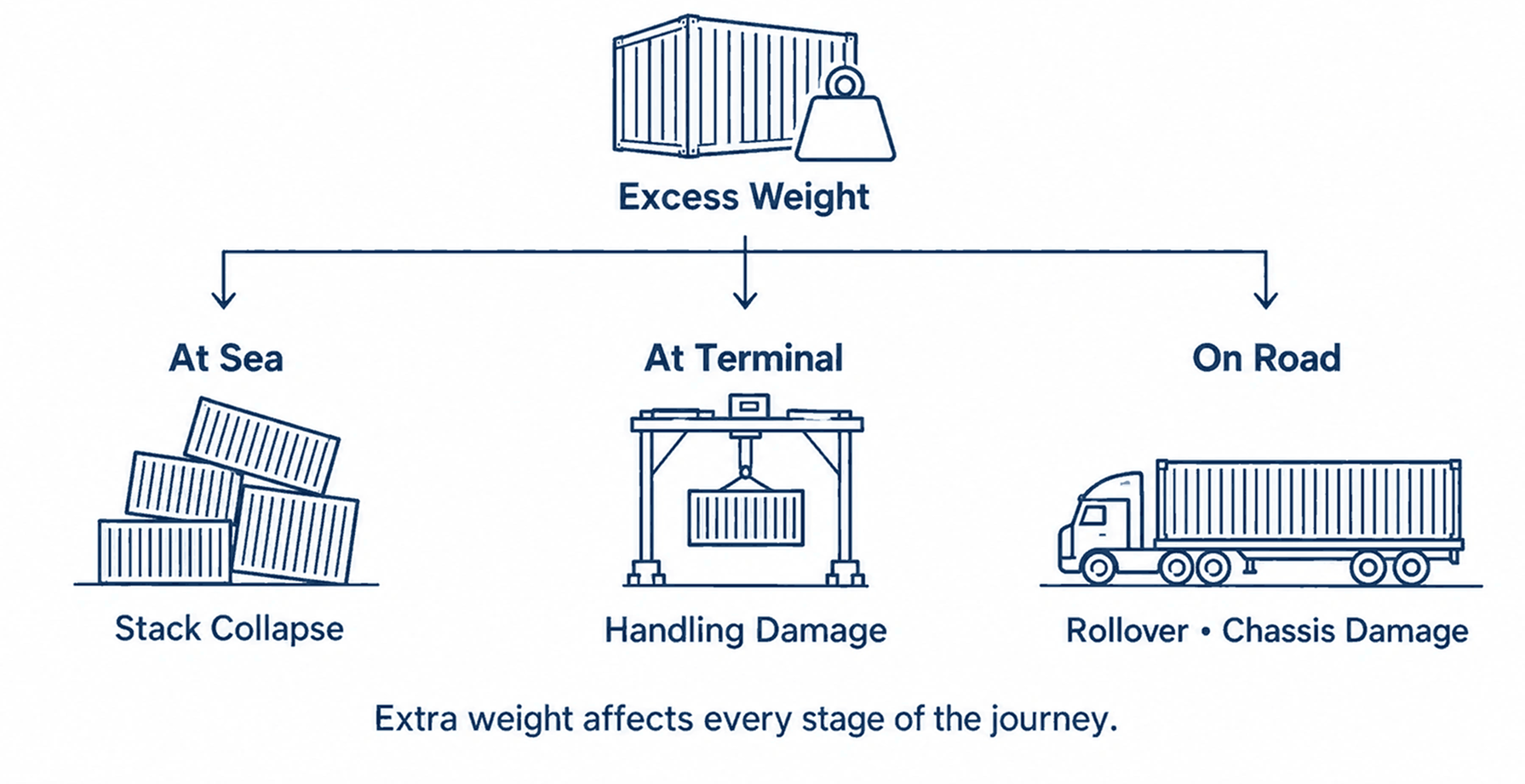
Extra weight travels with your cargo through every step of the trip.
Stack collapse on ships: Heavy boxes declared as light often get stowed high up. In rough seas they can crush the containers below or snap lashings.
Crane and handling damage: Terminal cranes and reach stackers plan around declared weights. A few surprise tonnes can strain equipment and put dock workers at risk.
Truck rollovers: An overloaded container raises the centre of gravity, making trucks harder to control on turns and slopes.
Broken chassis: Too much weight can crack chassis frames, burst tyres or damage axles on the highway.
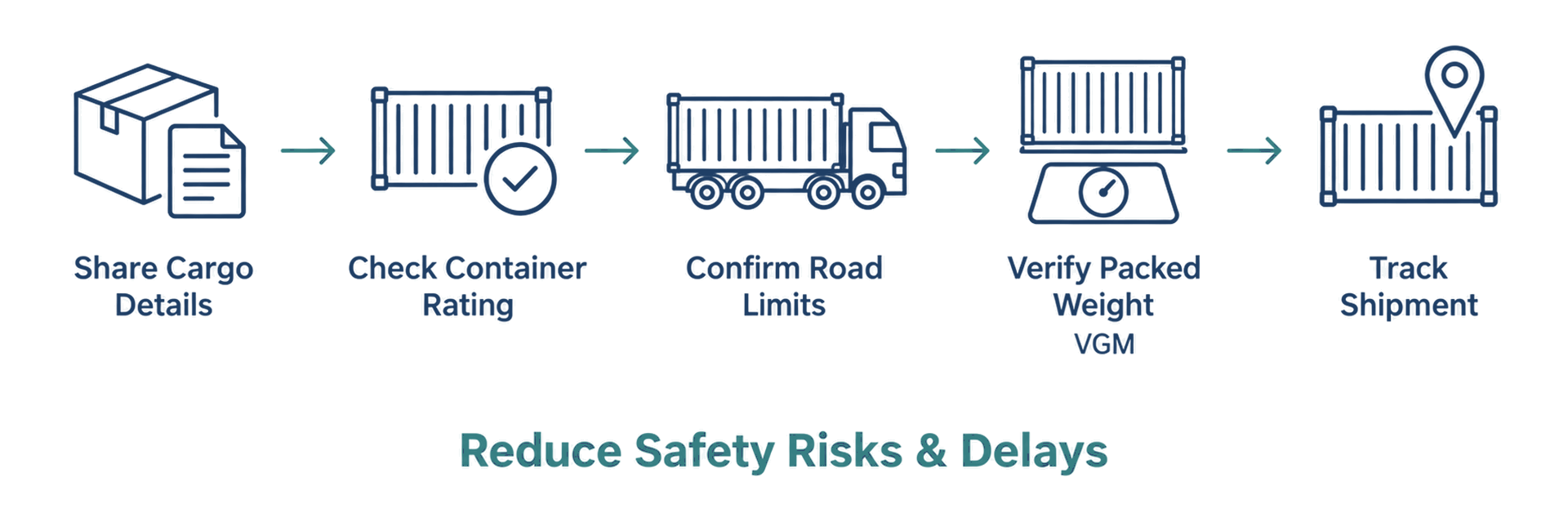
Since July 2016, SOLAS rules require a Verified Gross Mass (VGM) for every packed export container. That has helped, but VGM only confirms the weight. It does not check whether that weight is legal on the roads at the destination. Overweight fines, cargo transloading and port delays can quickly wipe out the margin on a shipment.
The safest move is to plan weight before you pack, not after. Share your cargo details with your freight forwarder early and confirm the road limits at both ends. Once your box is moving, Atmavaan Workspace Container Tracking lets you follow every milestone and spot holds before they turn into extra costs.
Get the latest reports, updates and highlights delivered to your inbox.
Get an estimate, or just tell a specialist what you are shipping — we handle everything from there.
Instant vessel schedules from trusted global shipping liners.
FREIGHT WITH SOUL · ON TIME, EVERY TIME
© Atmavaan 2026 · All rights reserved.
 Chat