













Reefer Shipping from India to USA
Temperature-controlled transport for pharma and food.
Follow us


Temperature-controlled transport for pharma and food.
By Kesh, Ocean Freight Specialist, Atmavaan · Published October 2026
One temperature slip can ruin a container of vaccines or frozen shrimp. Reefer container shipping is the heart of cold chain logistics, and holding the right temperature from factory to door protects both your cargo and your compliance.
[Insert featured image here. Alt text: Reefer containers plugged in at Nhava Sheva port, India]
A reefer container is a refrigerated container with insulated walls, a cooling unit and sensors. It actively controls temperature, and often humidity and ventilation. Most reefers hold a set temperature between about -30°C and +30°C.
Cargo type | Typical set-point |
Vaccines and biologics | +2°C to +8°C |
Room-temperature medicines | +15°C to +25°C |
Chilled meat and dairy | -1°C to +4°C |
Frozen meat and seafood | -18°C or colder |
Fresh fruit and vegetables | 0°C to +13°C |
Always follow the set-point and tolerance on your product specification.
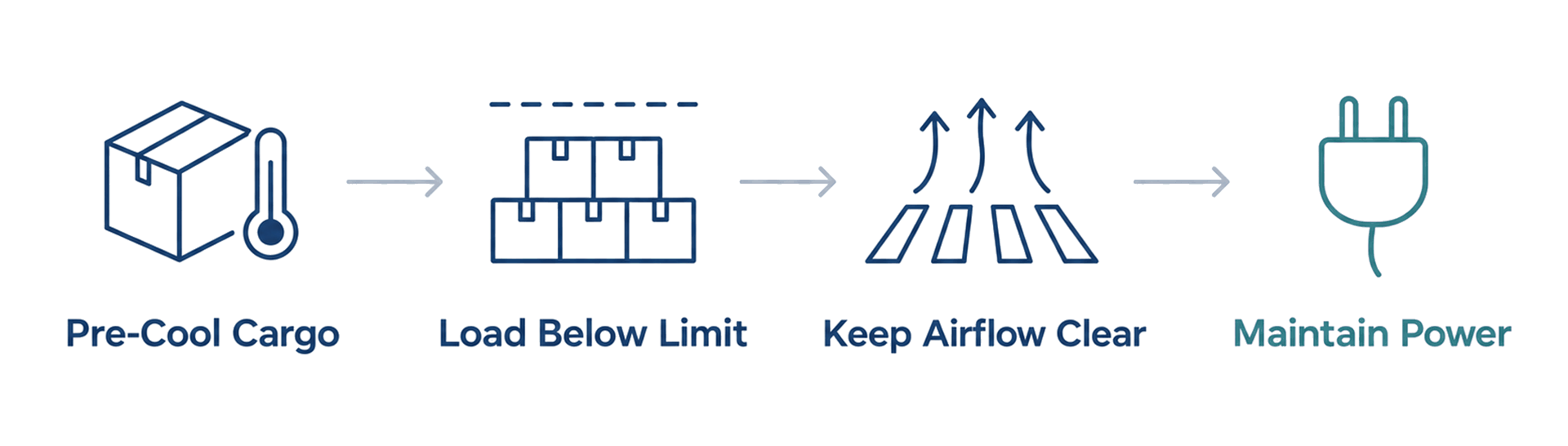
Pre-cool the cargo, not the empty container, unless you load through a sealed cold-chain dock. Otherwise warm air enters and condensation forms inside.
Load below the red line and keep the floor channels clear so cold air circulates.
Keep the unit powered at every stage: factory, truck, terminal and vessel.
A reefer cargo guide from insurer Steamship Mutual notes that most reefer claims come from wrong settings, poor airflow or power loss, all largely preventable.
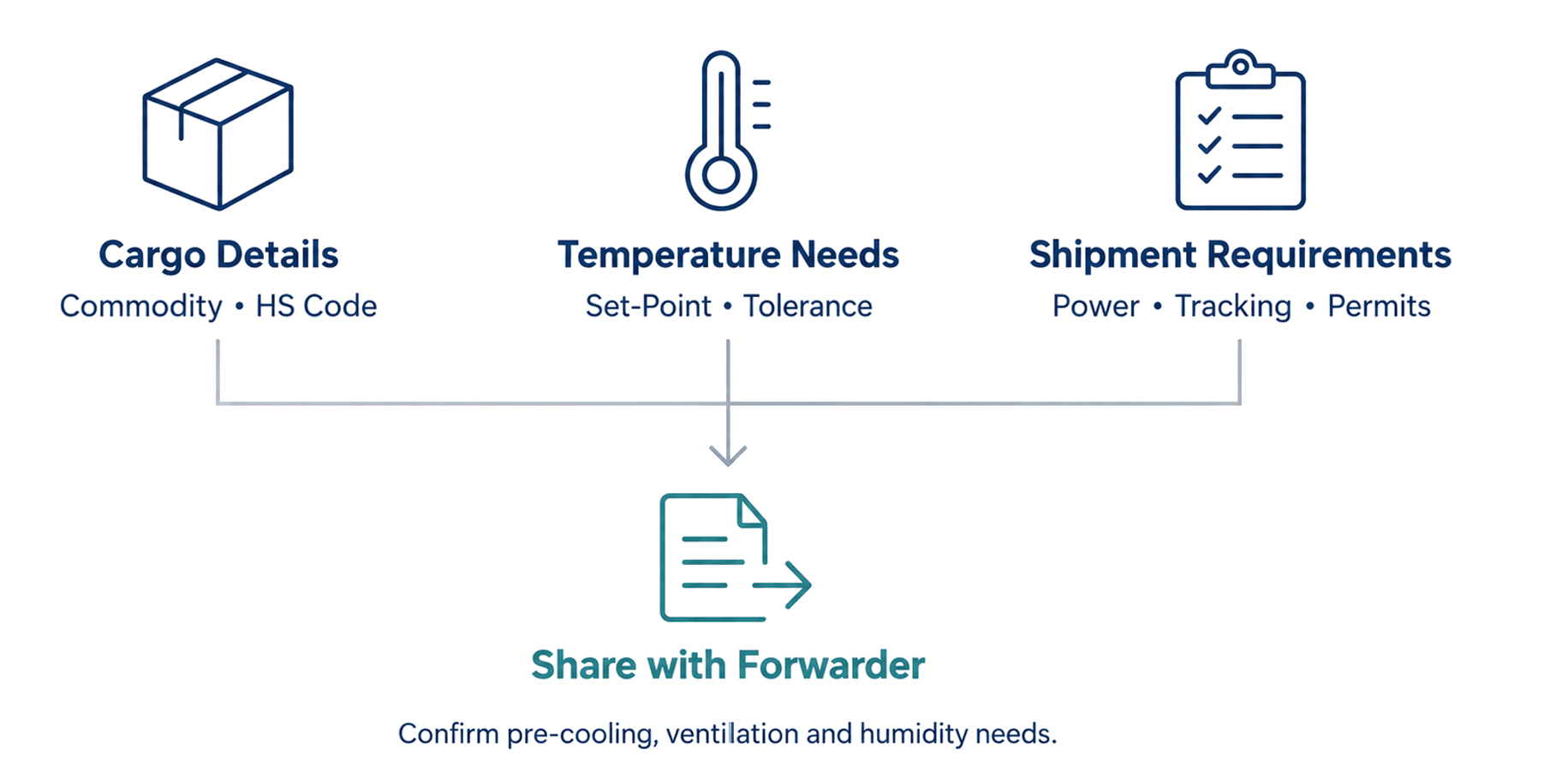
Commodity, HS code, set-point and allowed tolerance
Ventilation and humidity settings
Confirmation that the cargo is pre-cooled
Genset (power) needs for road legs
Data logger and real-time tracking requirements
Permits and certificates, such as pharma or food-safety documents
Indian companies supplied 47% of US generic prescriptions in 2025, and India is the top shrimp supplier to the US. The main reefer gateways are Nhava Sheva and Mundra for pharma and processed food, Chennai for south India, and Kochi and Visakhapatnam for seafood. Check sailings with our vessel schedule tools.
Food: FDA Prior Notice before arrival and a registered food facility
Medicines: FDA registration and drug listing for the manufacturer
All ocean cargo: ISF filed at least 24 hours before loading
Confirm product-specific rules with your customs broker, and estimate duty with the Atmavaan Tariff Simulator.
The last mile, from US port to consignee, is where the cold chain most often breaks. A clip-on genset powers the reefer during road delivery, so confirm fuel, book delivery slots early, make sure the consignee is ready to unload, and record the temperature on arrival. Pharma loads need these records for audits. Follow every move with Atmavaan Container Tracking. Trucking from Mexico or Canada? See our cross-border trucking checklist.
Most vaccines and biologics ship at +2°C to +8°C, within the tolerance on the product specification.
Yes. All imported food, including seafood, needs Prior Notice filed with the FDA before arrival.
Get the latest reports, updates and highlights delivered to your inbox.
Get an estimate, or just tell a specialist what you are shipping — we handle everything from there.
Instant vessel schedules from trusted global shipping liners.
FREIGHT WITH SOUL · ON TIME, EVERY TIME
© Atmavaan 2026 · All rights reserved.
 Chat
Chat